Ever been curious about staying at a hostel but dismissed the idea because they’re only for “youths”, hippies or shoestring travelers? Well, while they are a good option for all of the above, they’re also more inclusive and practical than you might have previously thought.
I stayed at two branches of Hostelling International (HI) in the United States – in Austin, Texas and Seattle, Washington – in the autumn of 2019 and thought it’d be a great chance to let those of you curious about hostels know what it’s really like.
Though I’ve stayed at hostels across Europe, from Latvia to the Czech Republic, this was my first time staying in hostels in my homeland, the good ol’ US of A. I hadn’t considered staying at hostels in the U.S. in the past because I was usually either staying with or traveling with friends and family during my visits, and when split between two or more people, hotel rooms can be affordable. But while solo traveling from Estonia (where I live) to Oregon (where my family lives), I took the opportunity to stay at two hostels to save money and meet cool people.
Important to know about Hostelling International
HI USA is a non-profit organization that promotes hostel travel especially for young people but does not have age limits. As a non-profit, they have their own rules which vary from other hostels or hotels. Guests must have a HI USA membership, which costs $18 per year (available online) or $3 per day (can be added to your total at check-in).
Very important to note: since HI wants to welcome guests traveling further distances, they want you to prove that you don’t live in or near the city by showing a foreign passport or a US state-issued ID. This proved to be a huge issue for me while checking into HI Austin, since I live outside the US and only had a US passport and an expired Oregon driver’s license. I was initially told by the receptionist that I couldn’t stay there despite having booked and paid for two nights long in advance. I was only allowed to check in after proving that I never received details via Booking.com about what kind of government photo ID was required (and that I did, indeed, just arrive off a flight from Europe).
HI Austin, Texas


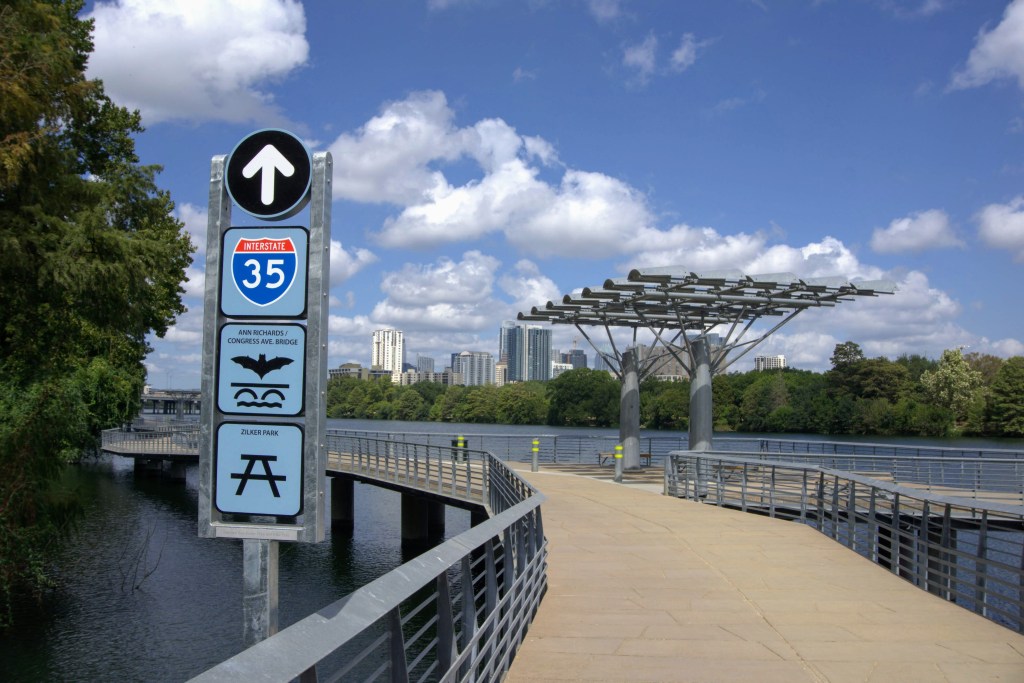
This place almost feels like a little surf shake, nestled between some shade trees a few blocks back off a busy road flanked by strip malls and taco shops. Hostelling International Austin sits on the shore of Town Lake and has a stand-up paddle board and canoe rental shop right next to it. It’s a short walk to a bus stop with frequent departures directly to the airport and downtown as well as to the boardwalk, which you can follow along the lake to the Ann W. Richards Congress Avenue Bridge (where the bats make their dramatic exit at dusk).
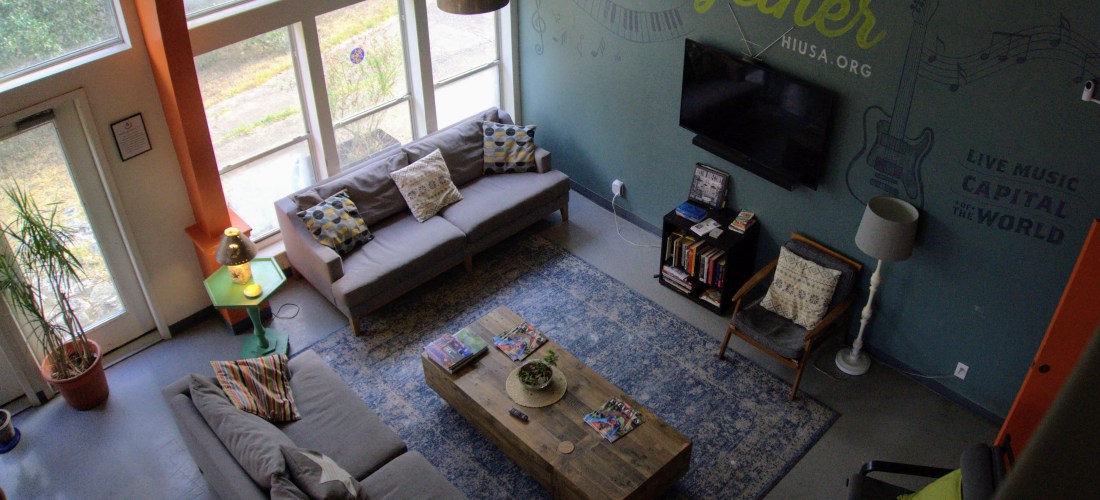
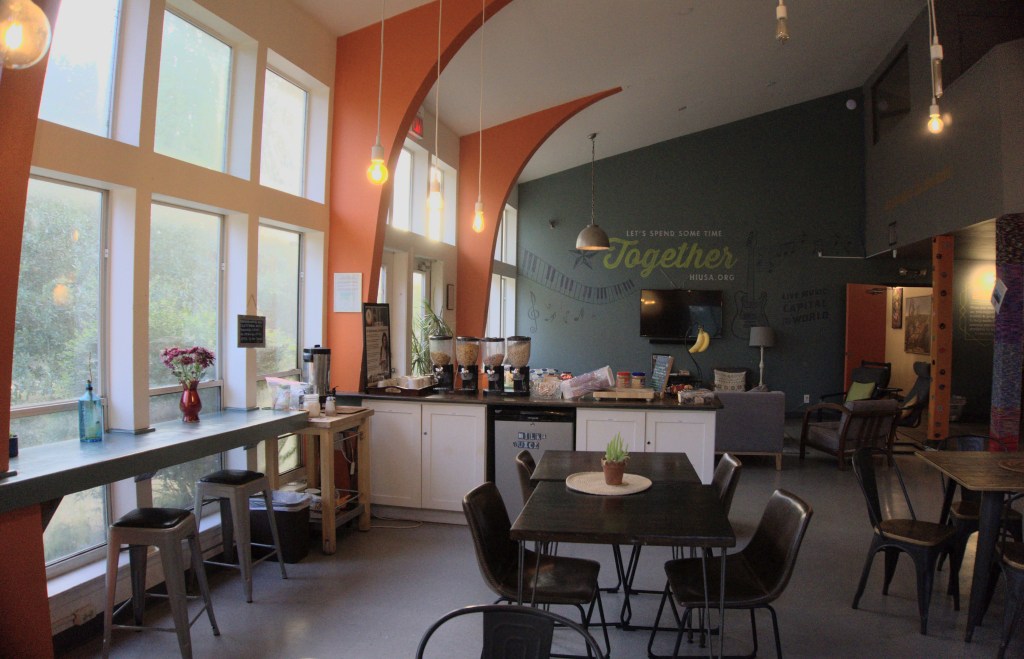
The dining and lounge area is ample with double-height ceilings and lots of natural light. Upstairs is another lounge/game room, and outside is a furnished and partially covered patio where smoking is permitted. The kitchen is fully-stocked with everything you need to cook and serve food. A modest breakfast of bread, cereal, instant oatmeal, juice, coffee and tea is served each morning, which was just enough to fuel me until I found heartier lunch fare in town.
My room was an eight-person female-only dormitory. I suspect it had previously been a six-person room but had another bunkbed crammed in to sleep more people. There were six metal lockers inside the room, each assigned to a specific bunk, with the remaining two beds having access to a locker down the hallway near the bathrooms. Lucky me, I got a bunk without a locker in the room. This was inconvenient, since whenever I wanted to get something from my luggage, I had to open my suitcase and dig through my things on the less than pristine hallway floor. I was also instructed to use one of the teeniest miniature padlocks I’ve ever seen to secure the locker. I had brought my own padlock, but didn’t want to press my luck – or the rules – with the receptionist after my check-in experience.
The bathrooms are separated into male/female and each consists of an open area with stalls for toilets and showers. The cleanliness in the bathroom left something to be desired, so I’d recommend taking a pair of flip flops to wear in the shower (but I’d recommend this in any public shower, to be honest). Nice, fluffy towels are provided at the front desk which is nice though!
HI Seattle, Washington


My favorite thing about HI – Seattle at the American Hotel was location, location, location! It’s situated in the heart of the International District, next to the Historic Chinatown Gate and Union Station. It’s just a block or two from the long-distance bus stop, the Amtrak train station and the light rail train from the airport. Once you step out the door, you’ll find asian restaurants of all kinds, bubble tea joints and international shops like Daiso and Uwajimaya. Downtown and Pike Place Market are just a 15-minute walk away as well.

I only stayed here for one night, so I didn’t take much advantage of the lounge areas, but the kitchen and dining room were buzzing with people even at 11pm on a Saturday, though not noisily. Breakfast was a bit crowded and only consisted of coffee, tea, bagels and toast.
Built in 1926, this building has a lot of stairs. Upon first entering, there’s a flight of stairs to get up to reception. From reception, the staff may let you take your luggage upstairs to your floor in an elevator, but it is normally available only for people with disabilities. This can be a consideration if you have heavy luggage like I did.
My six-person female only room was spacious compared to the room in Austin, but the metal beds creaked with every toss and turn, and the mattress had a permanent person-shaped indent. The lockers also left something to be desired, not in terms of size, but in terms of height. I had the top locker assigned to my bed, which meant lifting a 44-pound (20 kg) suitcase to at least shoulder height into the locker. And you will want to bring your own padlock. Otherwise, each bunk came with its own reading light and a mini fan. The bathrooms on each floor were male/female separated and each consisted of an open room with toilet and shower stalls.
Hostels aren’t great for…
If you’re an introvert who values your privacy and doesn’t take to the idea of showering in a stall locker room-style, then hostels might not be your cup of tea. The nature of the open rooms, lounges, kitchens and bathrooms facilitates interaction (which can be a great thing if you’re traveling alone and want to chat with new people).
Dorm bedrooms with creaky metal bunkbeds are also not ideal for light sleepers. I would recommend that everyone pack an eye mask and a pair of ear plugs, just to combat light from the opening and closing of the door and the sounds of your upstairs bunkmate climbing in and out of bed at night to go to the bathroom.
If you have a lot of luggage and/or valuables, you should consider that security naturally isn’t as high in a shared dorm room as it would be in a private hotel room. While you will probably have a locker in your room in which you can secure valuables, larger luggage may not fit, and it can be inconvenient to lock and unlock things every time you leave the room to brush your teeth or grab a glass of water.
Hostelling International is good for…
I would recommend staying at Hostelling International in Austin or Seattle if you’re open to socializing with people from around the US and world, want recommendations about what to do in town, and prefer to be somewhat centrally located and get good value for your money. The fully-stocked kitchens are also a great amenity if you’re traveling on a budget and/or want to prepare meals yourself.
 Jae Jensen-Ginter · Freelance Writer